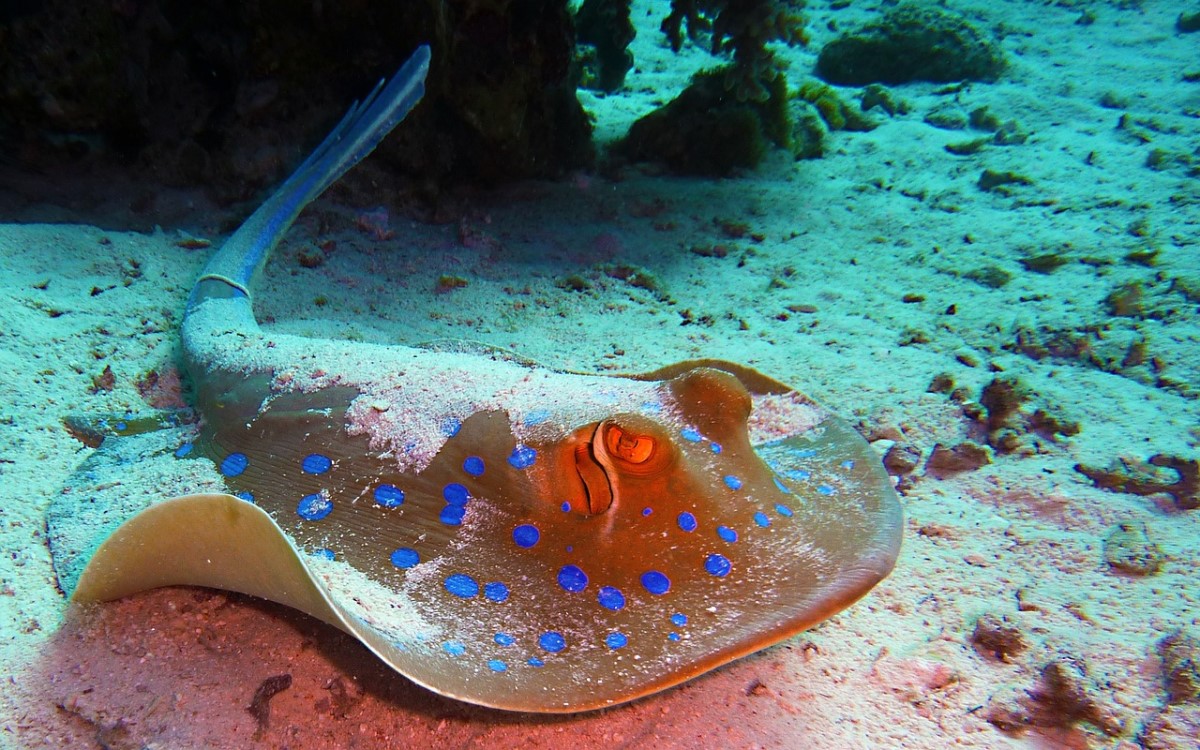
December 7, 2023 ǀ Sharks, rays and skates are the ocean’s most threatened vertebrate group. Research led by the University of Zurich into their functional diversity has now revealed previously overlooked, critical conservation priorities, thereby underscoring the urgent need for targeted action to safeguard the threatened species.
Biodiversity – the total variation of life – is multidimensional. Its study encompasses multiple facets, such as taxonomy (the variety of species), phylogenetics (their evolutionary history) and functionality (the ecological roles that species play in ecosystems). Protecting biodiversity implies safeguarding all of these dimensions.
Now, an international team of researchers led by Professor Catalina Pimiento of the University of Zurich have unraveled the complex dimensions of elasmobranch biodiversity – the ocean’s most threatened vertebrate group, which includes sharks and rays. By contrasting functional diversity against other previously studied biodiversity facets – taxonomic and phylogenetic –, a new hierarchy of species and spatial conservation priorities emerged.
Functional diversity changes the perspective
The researchers used an unprecedented global trait dataset to quantify global elasmobranch functional diversity, revealing a rich tapestry of varied ecological roles played by threatened species.
“We identified the top endangered species crucial for maintaining the architecture of elasmobranch functional diversity, including the longfin mako shark, Ganges shark, daggernose shark, shortfin mako shark, and scalloped hammerhead shark,” explains Catalina Pimiento.
Spatial analyses further showed that elasmobranch functional richness is concentrated along continental shelves and around oceanic islands, revealing 18 unique functional diversity hotspots that only marginally overlap with those of other biodiversity facets.
“Many of the hotspots vital for elasmobranch biodiversity converge with fishing pressure along the coast of China, others fall around oceanic islands and high seas,” says Dr John Griffin of Swansea University, co-author of the study.
Previously, two different biodiversity facets were used to identify conservation priorities – taxonomic and phylogenetic: the International Union for Conservation of Nature’s (IUCN) Red List of Threatened Species evaluates the urgency of a species’ extinction risk, and the EDGE of Existence program expanded this approach by also taking into account phylogenetic distinctiveness – whether or not species have long and unique evolutionary histories.
Call to action
Alarmingly, the study finds that the multiple facets of elasmobranch biodiversity remain inadequately protected within the global Marine Protected Area network, leaving these species vulnerable to various threats.
“Several global regions, including the coasts of China and Europe, that host hotspots of elasmobranch biodiversity face extreme threats from industrial fishing,” says Fabien Leprieur of the University of Montpellier, co-author of the study, further emphasizing the urgency of conservation efforts.
The research underscores the need to integrate functional diversity into conservation strategies for elasmobranchs and other highly threatened species. As crucial components of marine ecosystems for millions of years, the preservation of elasmobranch biodiversity is paramount to ensuring the continued health of our oceans.
Original publication:
Pimiento, C., Albouy, C., Silvestro, D. et al. Functional diversity of sharks and rays is highly vulnerable and supported by unique species and locations worldwide. Nature Communications, 24 November 2023, 7691 (2023). Doi.org/10.1038/s41467-023-43212-3