Filter by Themen
Filter by Kategorien
Filter by Veranstaltungsschlagworte
FS Logoi

Iraq: Lack of water results in displacement

A new report published by the Dutch research institute Deltares and the International Organization of Migration (IOM) focuses on understanding variations in the quality and quantity of water in Iraq. Deltares and IOM have also launched an interactive webtool to follow up the water crisis in Iraq.

von | 15.07.20

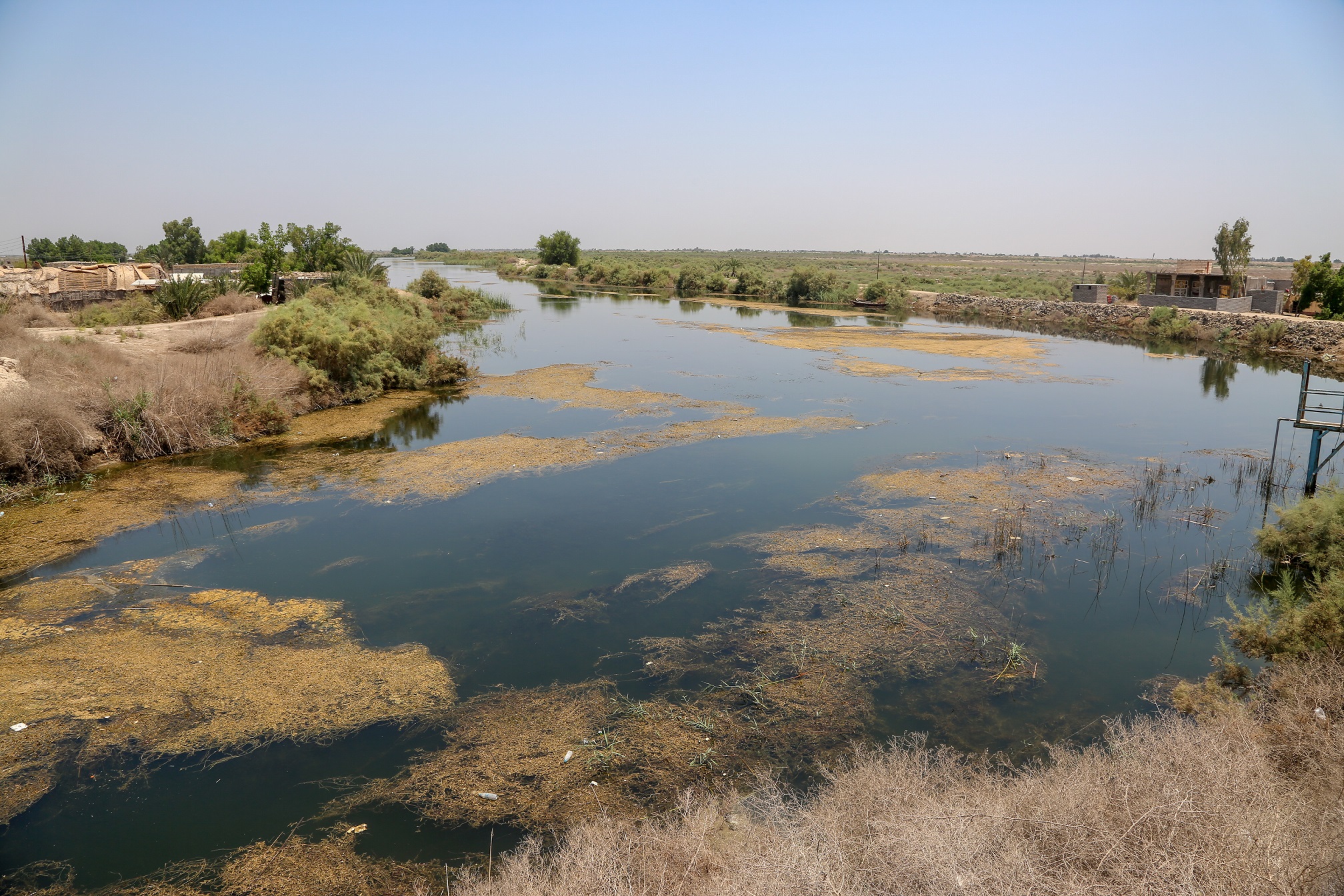
View of an irrigation canal in the Basra marshlands, southern Iraq. Water scarcity has led to the displacement of thousands of individuals in Iraq's central and southern governates. Photo: IOM/Hassan Almahmoud, 2019

Iraq faces a complex water crisis that is expected to persist and might have implications at the humanitarian, socioeconomic, security and social levels, including population movements. In July 2019, the International Organization of Migration (IOM) in Iraq identified 21,314 internally displaced persons (IDPs) from the central and southern governorates who were displaced due to the lack of water associated with high salinity content or waterborne disease outbreaks.
Intake from the Tigris and the Euphrates rivers – Iraq’s primary sources of water – is decreasing at an unprecedented rate. Concurrently, climate change is leading to increasing average temperatures and decreasing annual rainfall, causing further challenges throughout the region. The risk of water shortage induced displacement of populations in Iraq remains high due to degradation of the quantity and quality of available water.

Understanding variations in water

Deltares and IOM Iraq have published a new report — Water Quantity and Water Quality in Central and South Iraq: A Preliminary Assessment in the Context of Displacement Risk — focused on understanding variations in water quantity and water quality in central and southern governorates over the last two decades. “As a member of the Water, Peace and Security Partnership, Deltares aims to improve the availability of water data and information to help prevent water crises,” said Karen Meijer, Senior Researcher at Deltares. “Working with IOM has given us the opportunity to tailor our analysis to information needs for preventing and responding to water-related displacement and improve decision support in this area.”

Mitigating the water crisis

The report provides insight for the coming years, and key recommendations to mitigate the water crisis, based on an exploratory model-based analysis. “Water scarcity is one of the main threats to agricultural communities. Environmental factors are among the drivers of displacement and have witnessed this in governorates like Thi-Qar, Basra, Najaf and Kerbala,” said IOM Iraq Chief of Mission Gerard Waite. “The evidence presented in this report can inform future actions to mitigate a looming water crisis, that would leave vulnerable communities more at risk.”
More information: http://iraqrecovery.org/iraqwatercrisis/

Bildquelle, falls nicht im Bild oben angegeben:

Jetzt Newsletter abonnieren

Stoff für Ihr Wissen, jede Woche in Ihrem Postfach.

Hier anmelden

Joachim Herz Stiftung fördert Wasserforschung mit 12 Mio. Euro

Joachim Herz Stiftung fördert praxisbezogene Forschungsvorhaben für einen smarten Umgang mit Wasser. Mit insgesamt 12 Millionen Euro unterstützt die Stiftung dieses Jahr innovative Forschungsvorhaben rund um die wichtige Ressource Wasser. Bewerbungen sind bis Ende März bzw. Ende April möglich.

mehr lesen
Über 40 Prozent der großen Süßwassertierarten in fremde Gewässer eingeführt

Über 40 Prozent der heute lebenden großen Süßwassertiere (Megafauna), zu denen unter anderem Karpfen, Welse, Krokodile, Schildkröten, Biber und Flusspferde zählen, wurden bewusst außerhalb ihres natürlichen Verbreitungsgebiets angesiedelt. Diese gebietsfremden Arten können in den Einführungsregionen zwar wirtschaftliche Vorteile bringen, bergen jedoch zugleich erhebliche und oft unterschätzte Risiken für die einheimische Biodiversität und die lokale Bevölkerung.

mehr lesen
Wien erneuert Hochquellenleitung

Die Stadt Wien führt derzeit planmäßige Wartungsarbeiten an der II. Hochquellenleitung durch. Diese Instandhaltungen sind Teil des sogenannten „Frühjahrsputzes“ und dienen dazu, die langfristige Versorgung mit hochwertigem Hochquellwasser aus den Alpen zu sichern.

mehr lesen

Passende Firmen zum Thema:

Sie möchten die gwf Wasser + Abwasser testen

Bestellen Sie Ihr kostenloses Probeheft

Überzeugen Sie sich selbst: Gerne senden wir Ihnen die gwf Wasser + Abwasser kostenlos und unverbindlich zur Probe!

Finance Illustration 03