April 5, 2023 | The world-renowned hydrologist Andrea Rinaldo is awarded the Stockholm Water Prize 2023 for his ground-breaking research on river networks, demonstrating their significance in the spread of solutes, aquatic species, and diseases.
Professor Andrea Rinaldo is a leading authority in hydrologic sciences. His pioneering research has generated insights into the complex ways in which water shapes the Earth’s surface and ecosystems. He has further provided in-depth knowledge of how solutes and populations move at varying speed, both on and beneath the Earth’s surface.
Understanding Rivers as Ecological Corridors
Professor Rinaldo’s quantitative analyses provide a fundamental understanding of rivers as ecological corridors. With the development and maintenance of such corridors being largely responsible for the spread of aquatic species and their populations, this research is key for helping policies and practices improve the preservation of species. Professor Rinaldo’s models for water’s role in disease transmission have been applied to real-world hotspots of diseases, such as cholera and schistosomiasis in Haiti, South Sudan, and Burkina Faso, linking fundamental research to real-life application.
Uncovering the Complex Connections in Aquatic Bodies
On being awarded the Stockholm Water Prize, Professor Rinaldo said:
“I am humbled by, and proud of, following in the footsteps of previous laureates, especially those I know – or knew and miss sorely – and admire wholeheartedly. I am very grateful to the Nominating Committee, the Stockholm International Water Institute, and the Royal Swedish Academy of Sciences, for their selection and motivation.”
In its citation, the Stockholm Water Prize Nominating Committee said:
“Professor Rinaldo is a thought leader in hydrologic sciences whose conceptual and quantitative models have provided in-depth understanding to the fields of hydrogeomorphology and ecohydrology. In his research, he has uncovered the key connections between river networks and the spread of solutes, aquatic species, and diseases.”
SIWI’s Executive Director Torgny Holmgren commented:
“Andrea Rinaldo has significantly advanced our understanding of the complex interactions between the hydrologic cycle, ecological processes, and landscape evolution. His models have provided us with invaluable tools to preserve and protect life through informed policies and practices.”
Inspired by the Power of Water
Andrea Rinaldo is a professor of hydrology and water resources at the École Polytechnique Fédérale de Lausanne and at the University of Padova. He was born in Venezia, Italy, where, he says, the power and importance of water inevitably became a significant part of his life. During his career, Professor Rinaldo has co-authored more than 320 peer-reviewed articles for the most prestigious academic journals in hydrology, ecology, and physics, as well as interdisciplinary journals such as Science and Nature. In the 1970s, he played for Italy’s national rugby team, and he is currently a member of the Board of Directors of the European Professional Club Rugby in Lausanne.
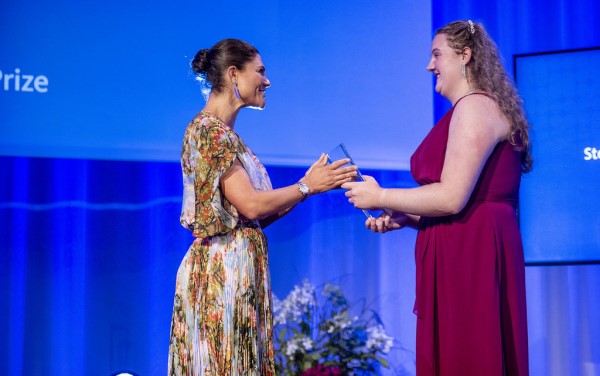
The Stockholm Water Prize is awarded by SIWI in cooperation with the Royal Swedish Academy of Sciences. The Prize will be presented to the laurate Professor Rinaldo by H.M. King Carl XVI Gustaf of Sweden, official patron of the Prize, on 23 August, during World Water Week. Founding partners of Stockholm Water Prize are Ålandsbanken, Bacardi, PDJ Foundation, WEF, and Xylem.