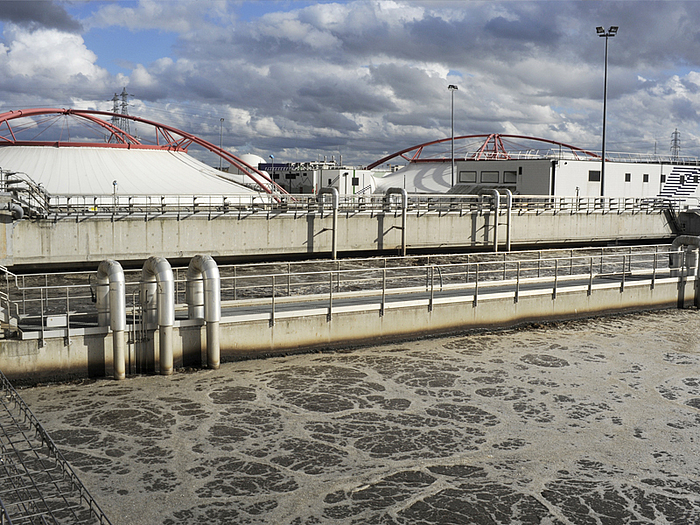
The European Commission has evaluated the Urban Wastewater Treatment Directive (UWWTD) to see whether the existing rules have reached their objectives, and whether they still serve their purpose. The assessment confirms that the Directive has proved very effective overall when fully implemented. The reduction of organic matter and other pollution in treated wastewater has improved water quality throughout the European Union.
A thorough modelling exercise conducted by the Joint Research Centre helped identify the needs for a revision of the Directive. Besides the fact that some EU countries are lagging behind with implementing the UWWTD in its existing version, further outstanding issues were identified that are not covered by the Directive so far. The EU Commission aims at tackling the following issues in the future:
- Stormwater overflows and untreated surface water runoff that reach water bodies without appropriate treatment,
- small agglomerations (e.g. cities, villages) below 2,000 p.e., that are often not a priority to be equipped with wastewater infrastructure, and that often rely on individual systems and
- badly designed, managed and/or monitored individual systems, used in large and small agglomerations.
Emerging pollutants and nutrients, transparency and governance need to be addressed
New challenges that have not been addressed by the existing UWWTD so far result from contaminants of emerging concern (CECs) and nutrients leading to eutrophication in parts of EU waters. Furthermore, the EU Commission plans to take care of the energy consumption of wastewater treatment plants and to better embed the Directive in the clean and circular economy. Technological developments require the regulation of monitoring and reporting to be updated. Additionally, governance can be improved by simultaneously considering solid financing, affordability and energy poverty of wastewater treatment.
Interested parties may participate via this link.